
Sunshine, backyard barbecues and a little botanical wisdom for keeping summer's most persistent party crashers at bay.
Summer is officially in full swing.
The grill is sizzling, the drinks are cold and the table is set beneath a shady tree. Everything is perfect.

Until the uninvited guests arrive.
Mosquitoes, gnats and other pesky insects have a remarkable talent for showing up just when the fun begins. And while nobody wants to spend a summer evening swatting mosquitoes, choosing the right insect repellent deserves a little thought.
Why You Should Avoid DEET*
For decades DEET has been a common ingredient in conventional insect repellents. However, it isn't without potential health risks. Adverse reactions can include skin irritation, rashes, contact dermatitis, eye irritation and respiratory discomfort from inhaling sprays.
More serious neurological effects including dizziness, loss of coordination, tremors and seizures have also been reported, particularly following excessive exposure or improper application.
As always, at Everyday Alkemi we highly recommend minimizing exposure to pesticides, these documented concerns provide a compelling reason to explore clean alternatives.
Can Natural Bug Repellents Really Work?

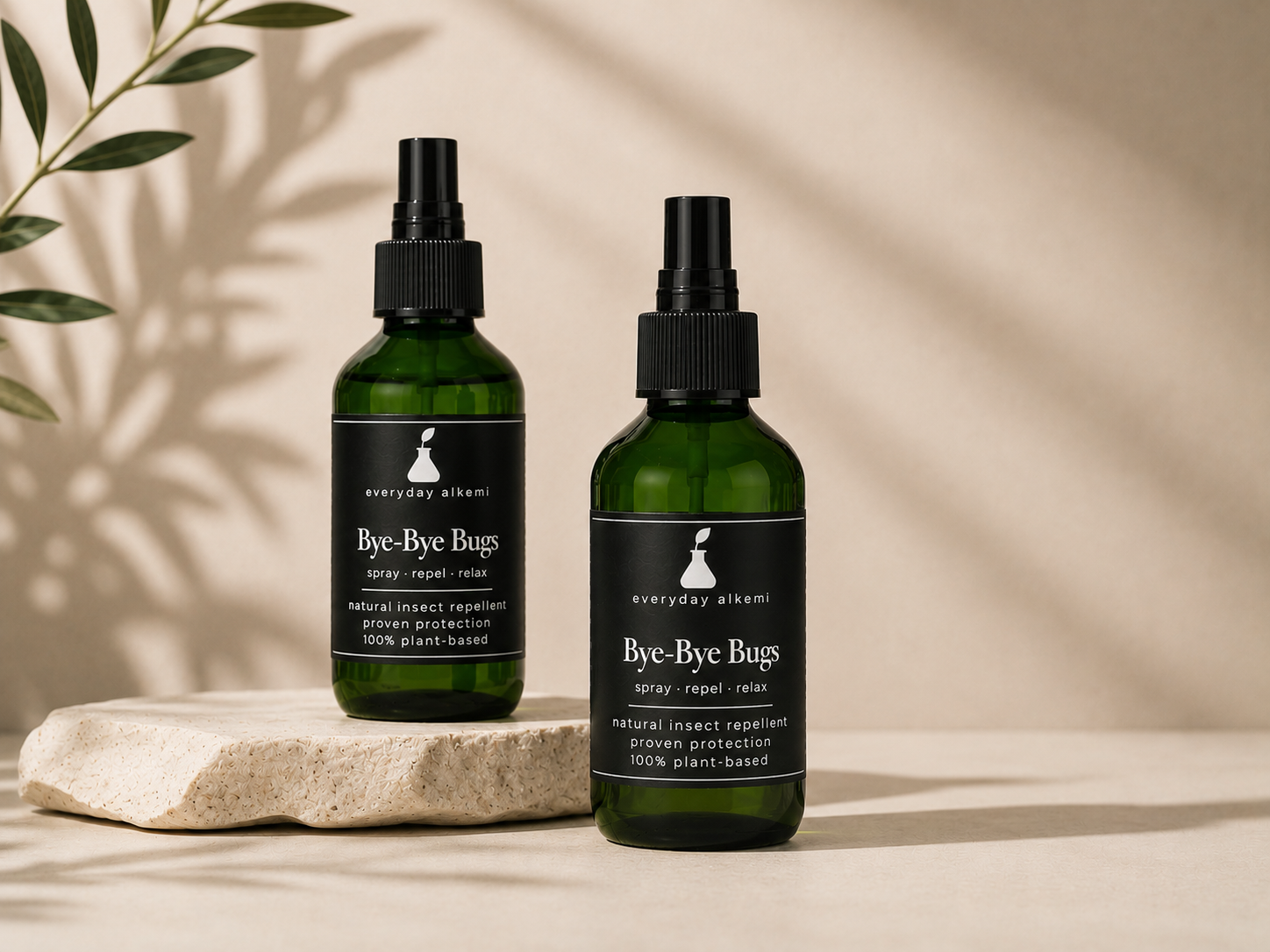
They absolutely can and Everyday Alkemi’s clean Bye Bye Bugs insect repellent has been tested by customers from summer-humid Tennessee to safaris in Africa with great results! Nature has developed some pretty remarkable ways of dealing with insects. Certain aromatic plants produce compounds that can discourage unwanted visitors—and those botanicals inspired our Bye Bye Bugs formula.
The Botanicals Behind Bye Bye Bugs
At Everyday Alkemi, we believe enjoying the outdoors should feel beautifully uncomplicated.
That's the inspiration behind Bye Bye Bugs, our DEET-free, botanical insect repellent created for people who appreciate plant-based ingredients and a more intentional approach to everyday essentials.
Lemon Eucalyptus is known for its fresh, citrusy aroma and its solid reputation as a botanical insect repellent
Lemongrass is a bright, grassy and contains naturally occurring aromatic compounds, including citral, that have shown insect-repelling potential
Thyme essential oil contains compounds studied for their successful activity against mosquitoes and other insects
Tea Tree — Best known for its distinctive herbal aroma, tea tree oil has also been investigated for insect-repelling properties.
Together these ingredients reflect our philosophy of thoughtful botanical choices, simple formulations and everyday products inspired by nature.
The important distinction is that not every natural formula offers the same effectiveness or duration of protection. Ingredients, concentrations and testing all matter.
Natural can be effective. But thoughtful formulation matters most.
Because summer memories should be about laughter, sunshine and one more evening under the stars.
Not the bugs.
Wishing you Health and Wellness,
xx Sada
Maker + Owner
Sidebar:
CDC's Agency for Toxic Substances and Disease Registry: Documents neurological, skin, respiratory and other adverse effects associated with DEET exposure.
EPA's Recognition and Management of Pesticide Poisonings: Identifies dermatitis, hives and rare neurological complications, including seizures.
National Pesticide Information Center: Describes skin and eye irritation, respiratory effects and reported neurological reactions.
For accuracy, serious reactions are uncommon and most reported severe cases involve excessive exposure, ingestion or misuse. The evidence does not establish that DEET cannot be used safely under any circumstances; the EPA considers labeled use acceptable.
